
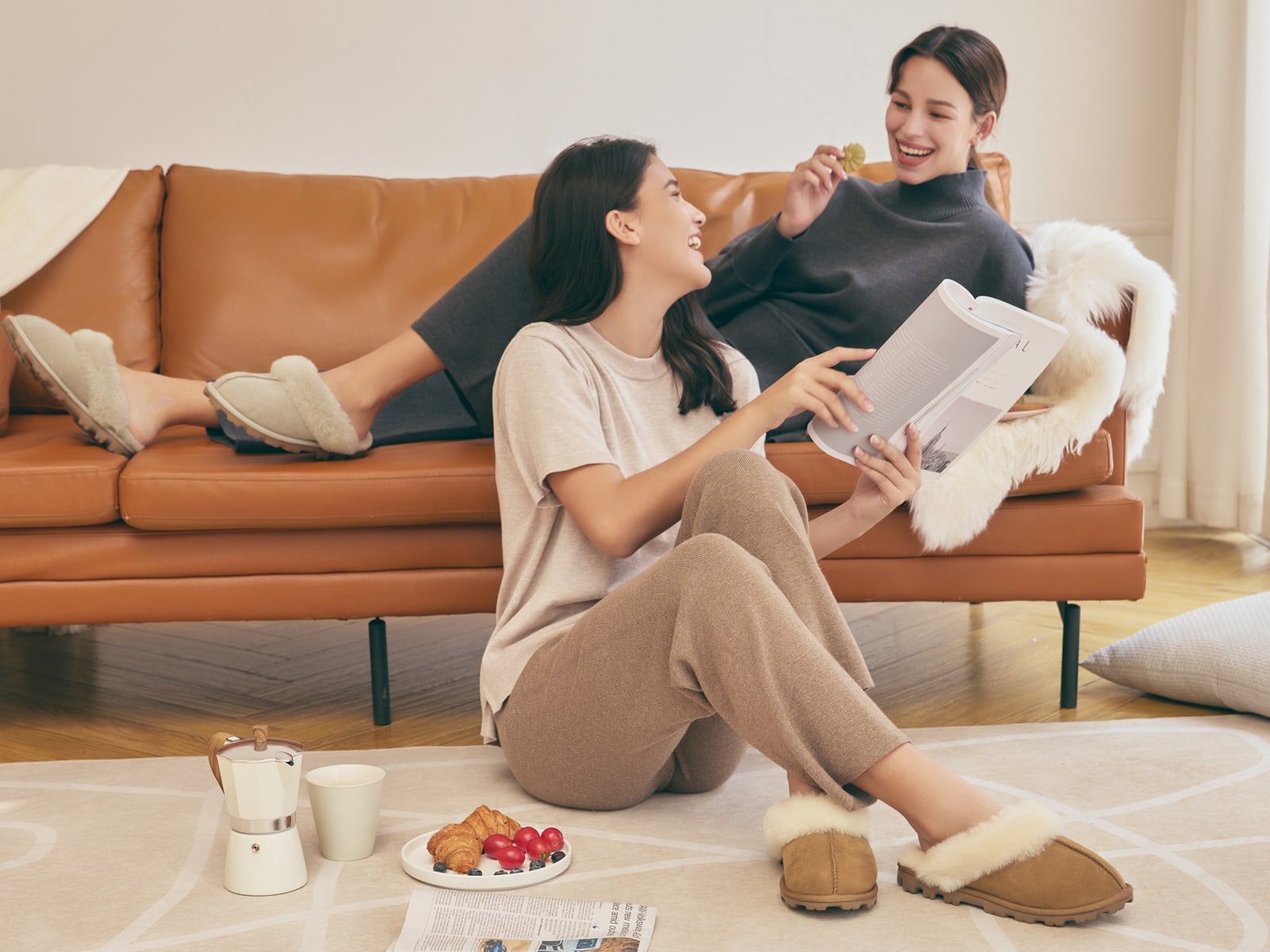
Hardwood changes what comfort means
On carpet, a slipper can be mostly soft. On hardwood, tile, and kitchen floors, comfort also means a steadier base and enough warmth between the foot and the floor.
That is why a good hardwood-floor slipper should be judged by lining, footbed, sole, and fit together.
Look for warmth around the foot
Real sheepskin wool helps create warmth around the toes and footbed, not only a soft layer under the heel.
For women who feel the cold through their feet first, the lining needs to do more than look fluffy in a product photo.
Choose a sole that feels grounded
A practical hard sole helps on hardwood, tile, stairs, kitchens, and quick dry steps outside. It should feel steady rather than delicate.
This does not mean the slipper should feel like an outdoor shoe. The best version still feels relaxed enough for home.
Fit matters for confidence
A slipper that slides around can make hardwood floors feel less secure. A gently held fit is usually better than a roomy fit that feels comfortable only in the first minute.
If the wearer wants extra hold, a closed heel may be the better choice. If she wants easy bedside comfort, a classic open slipper can still work when the sole and size are right.
Use the product page before Amazon
The website should help the customer understand the slipper before she reaches Amazon: what the lining is, how the sole feels, whether the heel is open or closed, and how the wool settles with wear.
That way Amazon becomes the checkout step, not the place where she starts over and compares every detail again.