
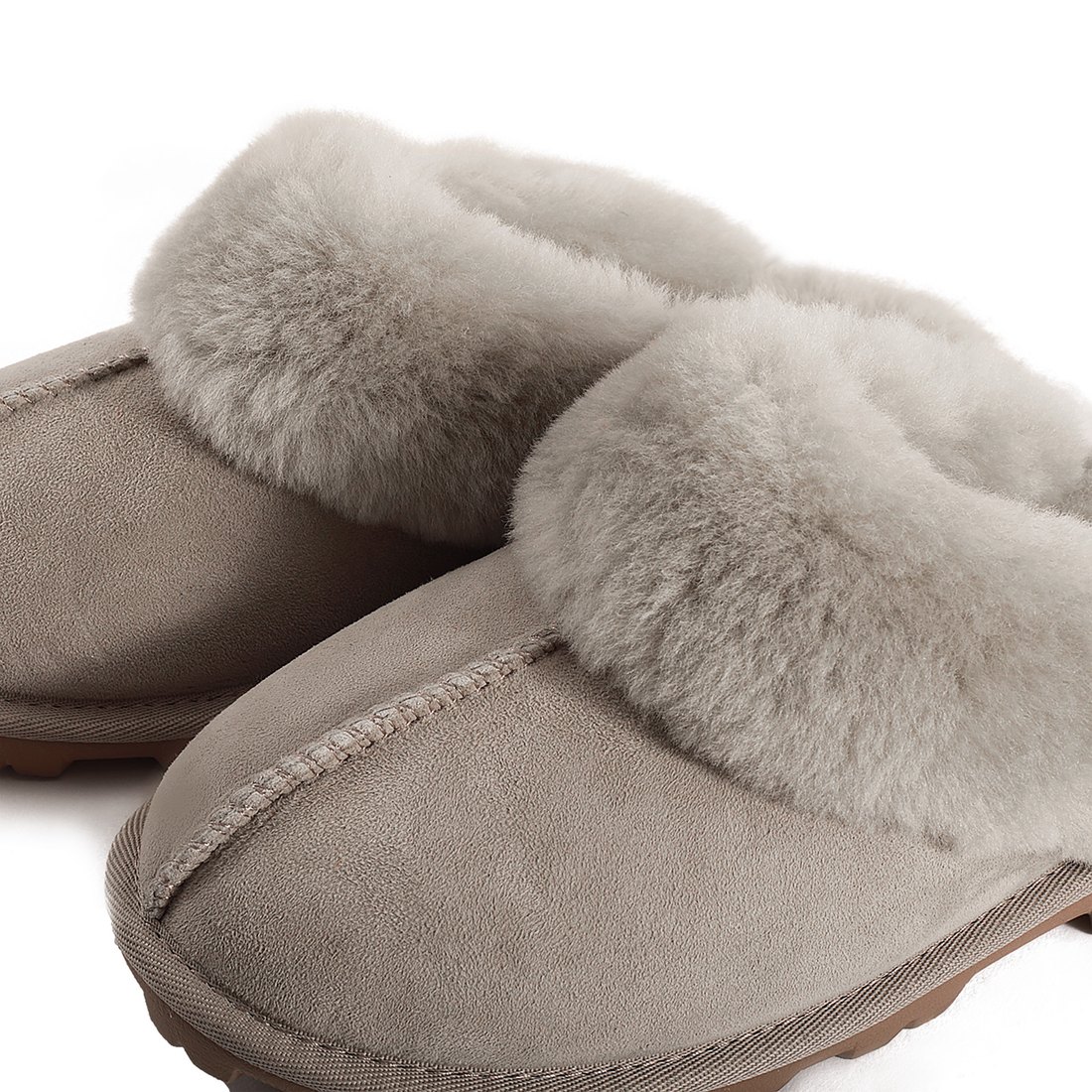
Check the care label before adding water
Sheepskin slippers can combine suede, natural wool, binding, adhesive, and a structured sole. Those parts may not react to water in the same way, so the product care label should come before any general cleaning advice.
If the label does not allow machine washing, do not treat the slipper like a washable fabric shoe. Start with the smallest affected area instead.
Remove loose dirt while the slipper is dry
Let mud or surface dirt dry, then use a soft suede brush or clean cloth to lift it away. Work gently and avoid pressing dirt deeper into the suede.
For the wool opening, light brushing can separate compressed fibers. Pulling hard can stretch the wool or disturb the edge of the slipper.
Spot clean small marks
Dampen a clean, light-colored cloth with cool water and blot the mark. Do not soak the suede, scrub in circles, or pour cleaner directly onto the slipper.
If a sheepskin-safe cleaner is needed, test it first on a small, less visible area and follow its instructions. Color can change when suede becomes wet, so patience matters more than pressure.
Dry at room temperature
Blot excess moisture with a dry towel, reshape the slipper gently, and let it air dry away from radiators, hair dryers, fireplaces, and direct sunlight.
Direct heat can make natural hide feel stiff and can change the appearance of suede. Drying may take time; that is safer than trying to speed it up.
Refresh the surface after drying
When the slipper is completely dry, brush the suede lightly to lift the nap and use a separate clean brush to refresh accessible wool.
A small amount of wool compression is normal with wear. Cleaning should make the slipper feel cared for, not try to return every fiber to its first-day position.