
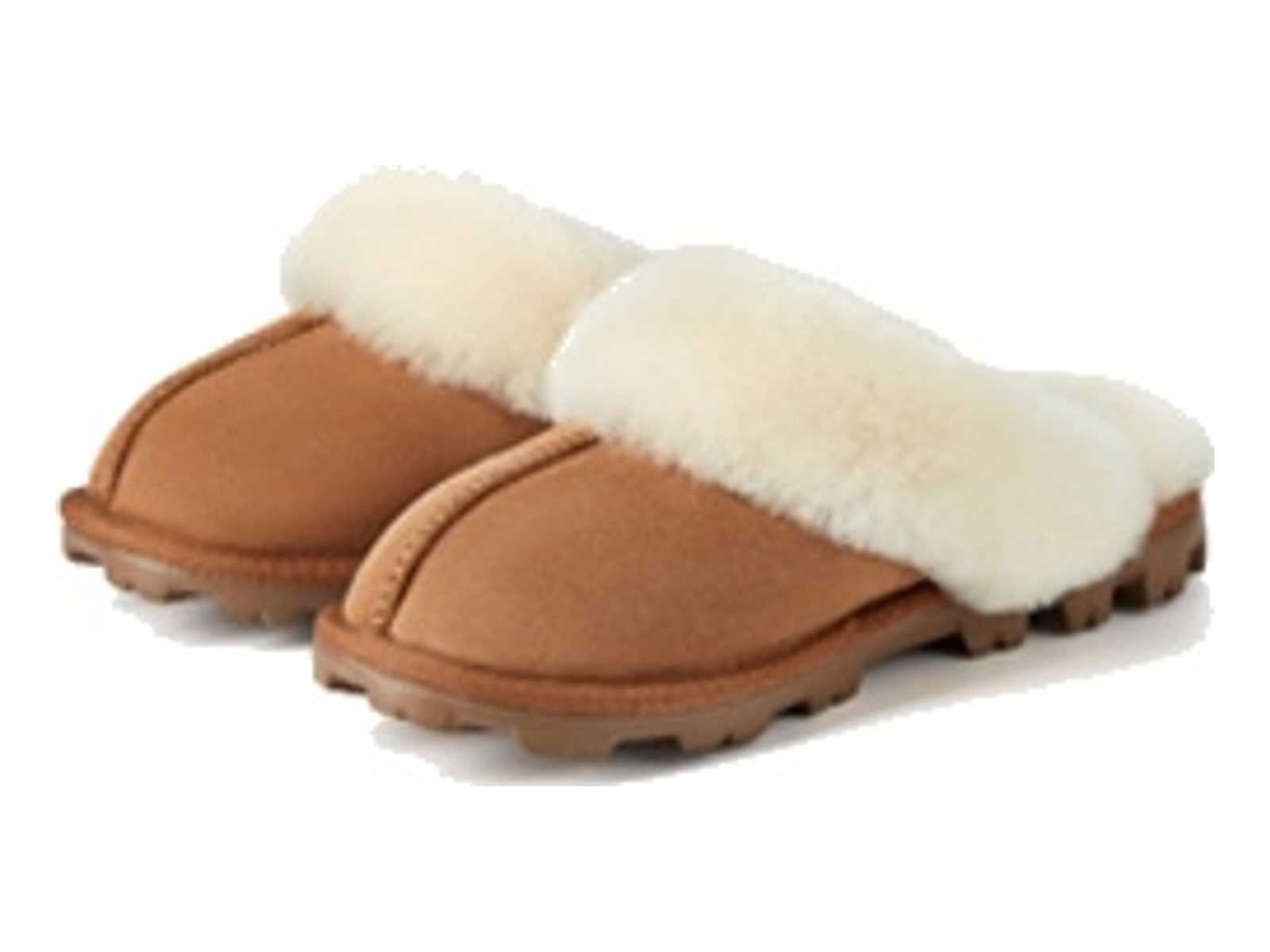
The care label gives the real answer
Some simple sheepskin items may be made for careful washing, but a structured slipper is more complicated. The suede upper, wool lining, binding, adhesive, and sole all need to tolerate the same process.
Because construction varies, the product care label is more reliable than a universal washing rule.
Why machine washing can be risky
A washing machine adds prolonged water exposure, movement, detergent, and spinning. Those forces can affect the shape, suede finish, adhesive, and natural hide.
A hard sole also holds the slipper in a fixed form. Even if the wool tolerates water, the complete slipper may not dry or reshape evenly.
Use the least water that solves the problem
For surface dust, start dry. For a small mark, blot with a lightly damp cloth. For a larger stain, use a sheepskin-safe product only after testing it on a hidden area.
This gradual approach reduces the chance of creating a water ring or changing more suede than the original mark affected.
Never speed-dry natural sheepskin
Whether a slipper is lightly damp or more deeply cleaned, let it dry naturally at room temperature. Keep it away from direct heat and strong sunlight.
Reshape it while damp, then wait until it is fully dry before brushing the suede or wool.