
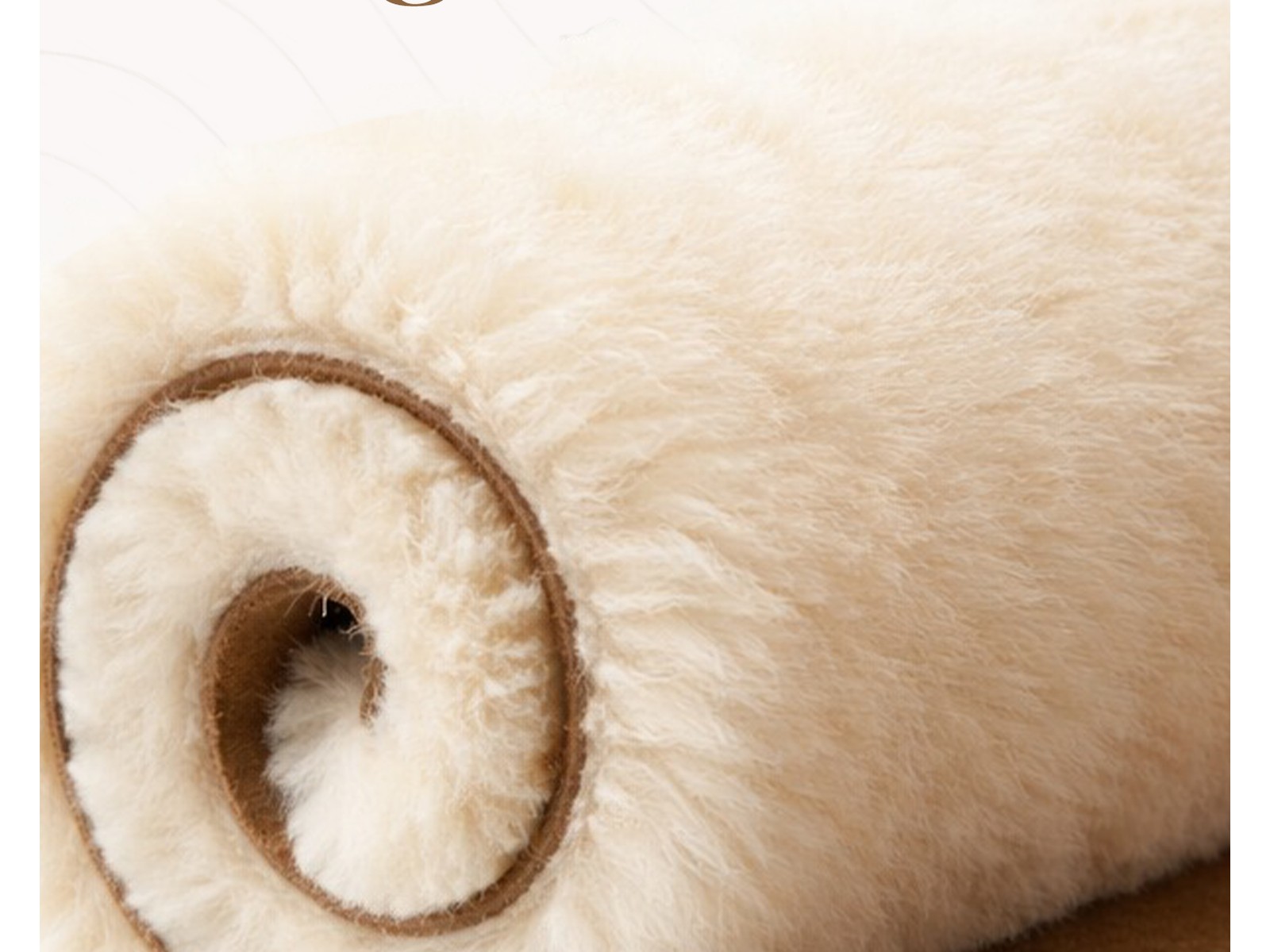
Start with the care label and the construction
The lining may be natural wool, but the complete slipper can also include suede, binding, adhesive, foam, and a structured sole. A method that is gentle on wool may still be wrong for the finished shoe.
Check the care label first. Unless it specifically permits a full wash, treat the inside as a series of small areas rather than soaking the slipper.
Remove loose debris while everything is dry
Turn the slipper opening downward and tap it gently. Use a clean, soft brush or a vacuum upholstery tool on very low suction to lift crumbs and surface lint that can be reached without pulling the wool.
Do not force a stiff brush deep into the toe. Work where you can see and control the fibers, and stop if the lining begins to pull.
Spot clean only the affected lining
For a small mark, use a clean, light-colored cloth barely dampened with cool water. Blot the wool instead of scrubbing it or pressing water into the footbed.
If the care label allows a sheepskin-safe cleaner, test it in a less visible area and follow the product directions. Avoid ordinary laundry detergent, bleach, and heavily fragranced household sprays.
Dry the lining completely
Press a dry towel gently against the cleaned area, open the slipper as much as its shape allows, and let it air at room temperature. Keep it away from radiators, hair dryers, fireplaces, and strong sunlight.
Do not wear or store the slipper until the inside is fully dry. Once dry, lift accessible wool lightly with clean fingers or a suitable soft brush.
Know when home cleaning is not enough
A deep liquid spill, oily mark, persistent odor, or widespread discoloration may require a cleaner experienced with sheepskin footwear.
Repeated wet cleaning can create a larger problem than the original mark. When the construction or care label is unclear, professional advice is the more controlled choice.