
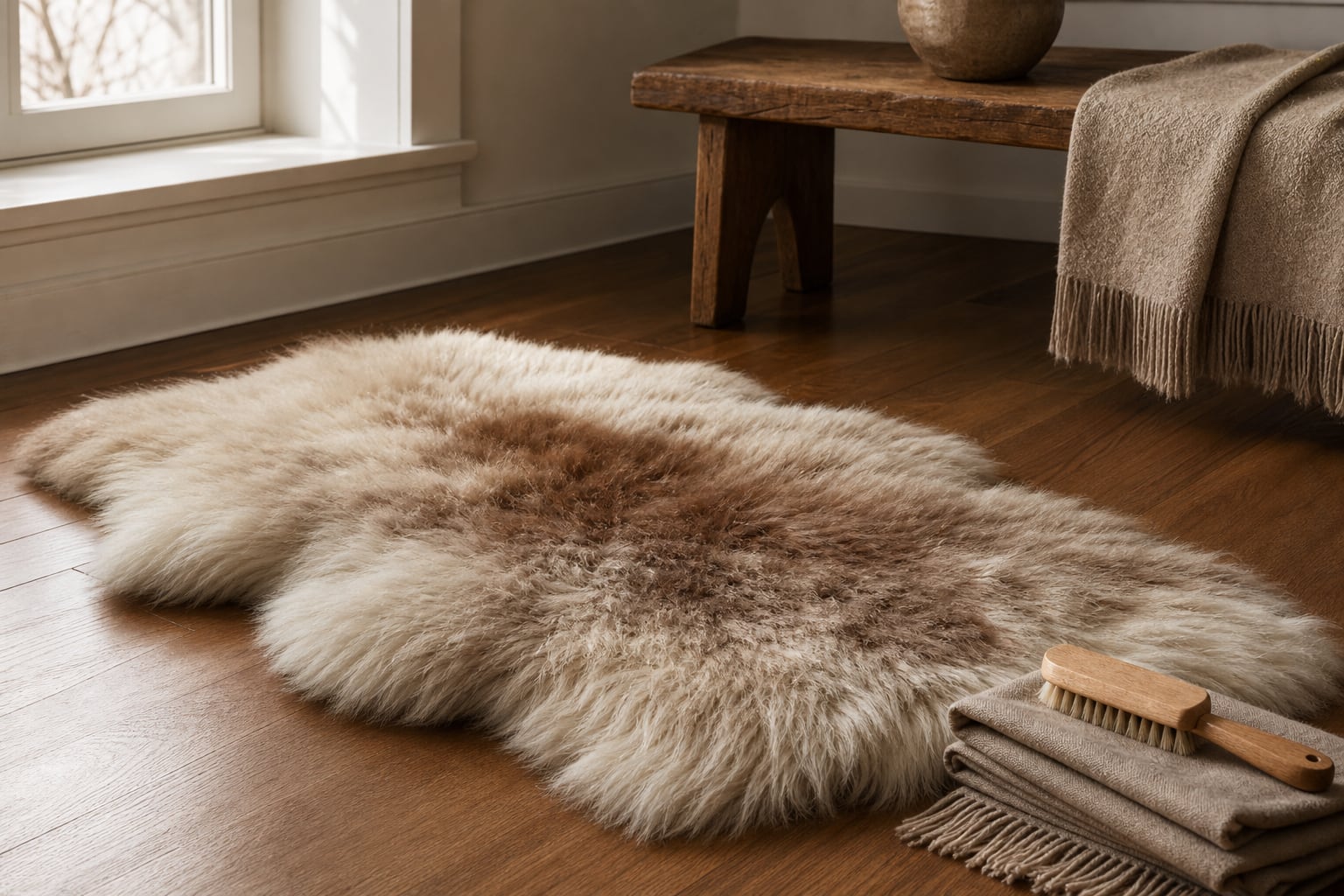
Brush only when the wool is dry
If the rug is damp, let it air dry naturally before brushing. Wet wool stretches and separates differently, and the hide should not be pulled while it is carrying moisture.
A dry rug is easier to assess because compressed areas, tangles, and natural fiber direction are visible.
Shake the rug before using a brush
Take the rug to a suitable area and shake it gently to release loose dust and lift the wool. This reduces the amount of debris the brush has to carry through the fibers.
Support larger rugs rather than pulling them from one narrow corner.
Work in small sections
Start at an outer edge and brush a small section with light, steady strokes. Hold the hide nearby with your other hand so the force stays controlled.
If the brush catches, stop and separate the fibers gently instead of pulling harder. The purpose is to lift wool, not remove it.
Expect some natural shedding
A small amount of loose fiber may come away during brushing, especially on a new or heavily compressed rug. Aggressive shedding or visible hide damage is a reason to stop.
Natural wool does not need to look perfectly uniform. Direction, curl, and density can vary across the rug.
Brush as needed, not on a rigid schedule
A rug beside a bed may need only occasional attention, while a chair cover or frequently touched area may compress sooner. Use appearance and feel as the guide.
Light, periodic brushing is usually more controlled than a forceful rescue after the wool becomes heavily matted.