
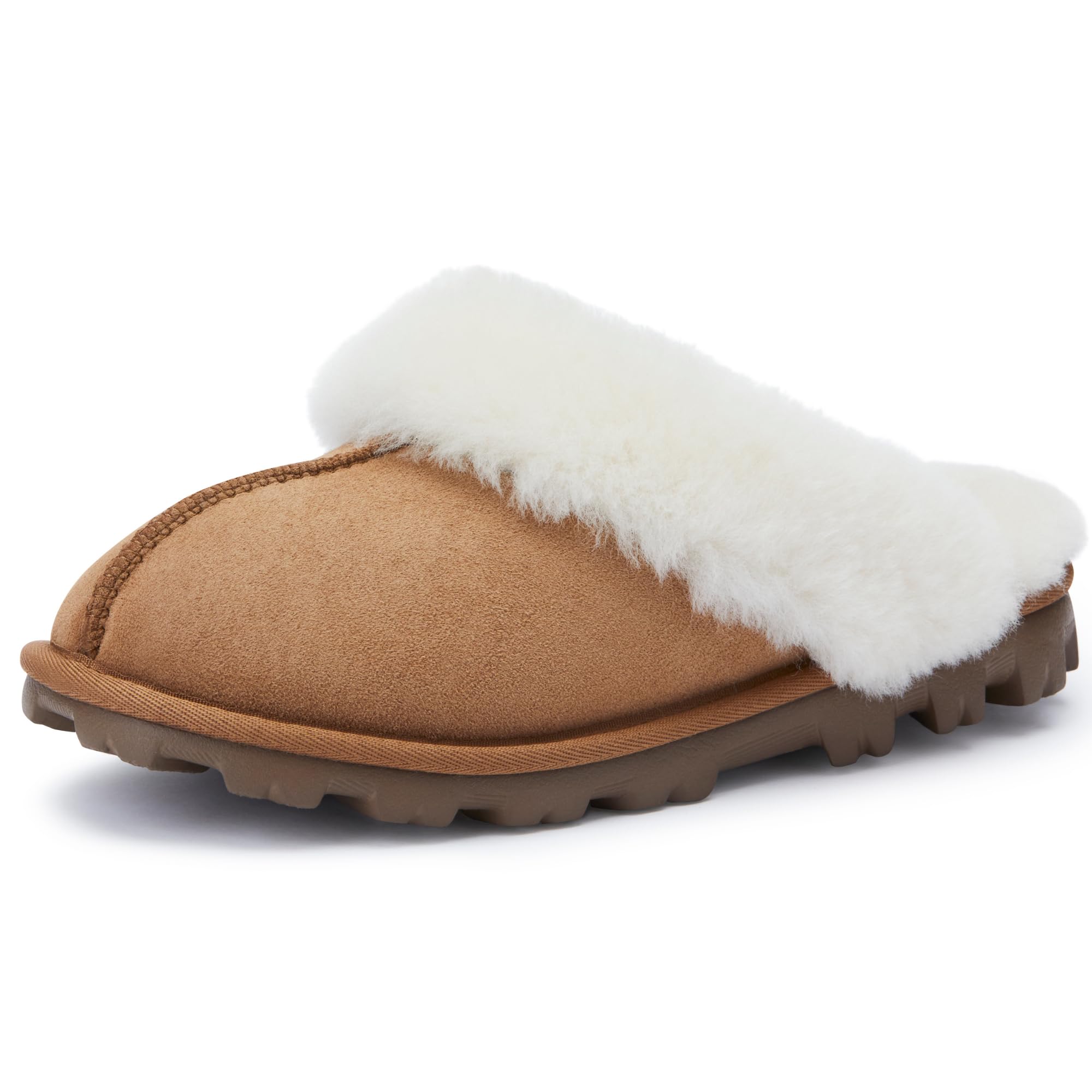
Warmth starts with the lining
For women who get cold feet easily, the lining matters more than a decorative outer shape. Real wool has loft, which creates a warm layer around the foot instead of only covering the top.
A slipper should feel warm around the toes, the sole of the foot, and the opening. If only one part feels soft, the warmth can feel uneven.
Choose secure, not oversized
It is tempting to size up for comfort, but a slipper that is too roomy can let cold air move around the foot. A better first fit feels gently held.
Natural sheepskin wool settles with wear, so a secure fit at first can become more comfortable over time.
Match the shape to her routine
Open-back slippers are easiest for bedside use and slow mornings. Closed-heel slippers feel warmer and more secure when she walks through the house for longer periods.
If she often moves between hardwood, tile, and a quick step outside, a practical sole can make the slipper feel more useful.
Look for comfort that lasts past the first photo
Some slippers look fluffy online but flatten quickly. Real sheepskin has a different kind of warmth: it looks natural, feels substantial, and changes gradually with wear.
For a practical winter gift, choose a slipper that explains the material, the fit, and the floor it is meant for.
For women over 50, stability matters too
Warmth alone is not enough if the slipper feels careless underfoot. A practical sole, a held fit, and a shape that does not slide around the house can matter more with age.
That does not mean the slipper should feel heavy or technical. The best version feels calm, warm, and steady without looking clinical.
The quick buying checklist
Look for real wool or sheepskin, a sole that matches the floor, and a fit note that explains whether the slipper should feel snug at first.
If the product page only says soft and cozy, it may not be enough information. A good cold-feet slipper should explain warmth, fit, and use clearly before checkout.